Abstract
Background: The endometrium is a dynamic, hormonally sensitive and responsive tissue. The endometrium is a site of a broad array of pathological alterations. Both benign and malignant lesions and hormonal cyclic changes can occur in the endometrium. These lesions have a significant impact in the life of woman. Objective: The aim of current study was to determine histopathologic patterns of Endometrial Biopsies and the associatied factors in Hawassa University Comprehensive Specialized Hospital. Method: A five years retrospective cross-sectional study was conducted from reports of endometrial biopsies which were submitted to the pathology department of HUCSH from September 2019 G.C to August 2024 G.C. Result: A total of 204 endometrial biopsies were analysed in this study that fulfil the inclusion criteria. The youngest age was 20 years and oldest was 79 years with mean age of 44.1 years and standard deviation of 11.939. 187 (91.7%) samples was Manual vacuum aspirations and 17 (8.3%) was hysterectomy specimens. The commonest histopathologic finding was chronic endometritis 55 (27%), followed by endometrial polyp 38 (18.6%), secretory endometrium 30 (14.7%) and proliferative endometrium 23 (11.3%). The other important patterns include endometrial hyperplasia without atypia 18 (8.8%), Atypical endometrial hyperplasia 16 (7.8%), endometrial cancer 20 (9.8%) and Tuberculosis 4 (2%). From the endometrial cancer cases, the commonest is endometroid endometrial carcinoma 8 (9.8%), followed by serous endometrial carcinoma 4 (2%), MMMT 3 (1.5%), endometrial stromal sarcoma 3 (1.5%) and clear cell endometrial carcinoma 2 (1%). The histopathologic patterns was significantly associated with age groups (p=0.01) and parity (p=0.036). Conclusion: Chronic endometritis is the commonest histopathologic finding.
Keywords
Histopathologic Patterns, Endometrial Biopsies, Hawassa Comprehensive Specialized Hospital
1. Introduction
The endometrium is the inner epithelial layer of uterus. It has a basal layer and a functional layer, the basal layer contains stem cells which regenerate the functional layer. The functional layer thickens and then is shed during menstruation. The endometrium consists of a single layer of columnar epitheliumplus the stromaon which it rests. The stroma is a layer of connective tissue that varies in thickness according to hormonalinfluences.
| [1] | JohnR, Goldblum, LauraW. Lamps, JesseK. Mckenney JM. Rosai and Ackerman’s Surgical Pathology 11th ed. Elsevier, 2017; 2018. |
| [2] | Singh, G., Cue, L., & Puckett, Y. (2024). Endometrial hyperplasia. In StatPearls [Internet]. Treasure Island (FL): StatPearls Publishing. Updated April 30, 2024. Retrieved from https://www.ncbi.nlm.nih.gov/books/NBK560693/ |
[1, 2]
.
Endometrial lesions can be categorized into non-neoplastic and neoplastic types, both of which are quite prevalent as significant cause of clinical signs and symptoms. Non-neoplastic lesions encompass conditions such as endometritis, endometriosis, adenomyosis, and tuberculosis, all of which contribute to clinical manifestations and have great impact on the morbidity. On the other hand, neoplastic lesions including endometrial polyp, endometrial hyperplasia and endometrial carcinoma pose a substantial burden on global morbidity and mortality.
| [1] | JohnR, Goldblum, LauraW. Lamps, JesseK. Mckenney JM. Rosai and Ackerman’s Surgical Pathology 11th ed. Elsevier, 2017; 2018. |
| [2] | Singh, G., Cue, L., & Puckett, Y. (2024). Endometrial hyperplasia. In StatPearls [Internet]. Treasure Island (FL): StatPearls Publishing. Updated April 30, 2024. Retrieved from https://www.ncbi.nlm.nih.gov/books/NBK560693/ |
[1, 2]
.
Endometrial cancer is the most prevalent gynaecologic malignancy in women and a significant cause of morbidity and mortality. It is the fourth leading cause of cancer, and the sixth cause of cancer death among women with estimated incidence of 66,200 cases and 13,030 deaths in 2023 in the United States. In Ethiopia according to GLOBOCAN 2022 there was 876 new cases of endometrial carcinoma and 5 year prevalence of 1958 ranking 18
th among other cancers with mortality rate of 3.2/100, 000. The prevalence of endometrial carcinoma accounts for nearly 3-4% of all cancers in women where as endometrial hyperplasia occur in 1 to 20% of women in which the incidence of endometrial hyperplasia is estimated to be at least three times higher than endometrial cancer and if left untreated it can progress to cancer, the prevalence increase in certain populations particularly those with risk factors like obesity, PCOS or unopposed estrogen exposure
| [2] | Singh, G., Cue, L., & Puckett, Y. (2024). Endometrial hyperplasia. In StatPearls [Internet]. Treasure Island (FL): StatPearls Publishing. Updated April 30, 2024. Retrieved from https://www.ncbi.nlm.nih.gov/books/NBK560693/ |
| [3] | Mahdy H, Vadakekut ES, Crotzer D. Endometrial Cancer. 2024 Apr 20. In: StatPearls. Treasure Island (FL): StatPearls Publishing; 2025 Jan–.
https://pubmed.ncbi.nlm.nih.gov/30252237 |
| [4] | Sung H, Ferlay J, Siegel RL, Laversanne M, Soerjomataram I, Jemal A, Bray F. Global Cancer Statistics 2020: GLOBOCAN Estimates of Incidence and Mortality Worldwide for 36 Cancers in 185 Countries. CA Cancer J Clin. 2021 May; 71(3): 209-249. https://doi.org/10.3322/caac.21660 |
[2-4].
The most common presentation of endometrial lesion is abnormal uterine bleeding. AUB is defined as bleeding from the uterine corpus that is abnormal in regularity, volume, frequency or duration and occurs in the absence of pregnancy. Traditionally descriptive terms like menorrhagia, metrorrhagia, polymenorrhea and oligomenorrhea have been used for AUB, in 2011 a new classification system (polyp, adenomyosis, leiomyoma, malignancy and hyperplasia, coagulopathy, ovulatory dysfunction, endometrial, iatrogenic, and not yet classified), known by the acronym PALM-COEIN, was introduced by the international federation of gynaecology and obstetrics (FIGO). In the new classification system PALM side refers to structural causes that could be evaluated and diagnosed on imaging and biopsy. The COEIN side allows consideration of underlying medical disturbances that could result in AUB
| [5] | Kumar V, Abbas AK, Aster JC. Robbins & Cotran Pathologic Basis of Disease Ninth Edition 2021. 1408 p. |
| [7] | S., A., G., P., & D., S. (2021). Study of histopathological patterns of endometrium in abnormal uterine bleeding. International Journal of Reproduction, Contraception, Obstetrics and Gynecology, 10(4), 1401–1405.
https://doi.org/10.18203/2320-1770.ijrcog20211110 |
[5, 7].
Endometrial biopsies can be obtained using various methods, each with advantages and indications. Generally, the indications for endometrial biopsy in patients with abnormal bleeding to assess for endometrial cancer typically include postmenopausal women bleeding, AUB in premenopausal women and abnormal endometrial finding in imaging. The techniques most frequently used to sample the endometrium include endometrial aspiration with a manual vacuum aspirator or pipelle and a dilatation and curettage procedure with or without hysteroscopy.
| [1] | JohnR, Goldblum, LauraW. Lamps, JesseK. Mckenney JM. Rosai and Ackerman’s Surgical Pathology 11th ed. Elsevier, 2017; 2018. |
| [5] | Kumar V, Abbas AK, Aster JC. Robbins & Cotran Pathologic Basis of Disease Ninth Edition 2021. 1408 p. |
| [8] | Vijayaraghavan, A., Jadhav, C., Pradeep, B., Bindu, H., & Kumaran, S. (2022). A histopathological study of endometrial biopsy samples in abnormal uterine bleeding. Cureus.
https://doi.org/10.7759/cureus.31264 |
[1, 5, 8]
.
2. Methods
2.1. Study Area
The study was conducted at the Pathology Department of Hawassa University Comprehensive Specialized Hospital (HUCSH), located in Hawassa, the capital of the Sidama Regional State, approximately 275 km south of Addis Ababa, Ethiopia. Hawassa has a temprate climatic condition and an estimated population of about 280,000, with two governmental and five private primary hospitals, numerous public and private clinics and pharmacies, one governmental university, and several public and private colleges. The city is one of the fastest-growing urban centers in Ethiopia and lies along the main asphalt road connecting Addis Ababa to Moyale. Established in 2005, HUCSH is the only referral and teaching hospital in the region, serving as a training center for Hawassa College of Medicine and Health Sciences, with a catchment population of approximately 18 million and an annual patient load of about 53,384. The Pathology Department is a specialized unit of Hawassa University that provides hematology, histopathology, and cytology diagnostic services to both public and private health facilities within and outside the region.
2.2. Study Design and Period
Institution-based retrospective cross-sectional study was done from September 2019 to August 2024.
2.3. Population
2.3.1. Source Population
All patients whose biopsy specimens were submitted to the department of pathology from September 2019 to August 2024.
2.3.2. Study Population
All patients whose endometrial biopsy specimens were submitted to the department of pathology in the study period from September 2019 to August 2024.
2.3.3. Inclusion Criteria
All original hard copy reports of endometrial biopsies having the required necessary information and Patient Medical chart from September 2019 to August 2024.
2.3.4. Exclusion Criteria
1) Endometrial biopsy with inadequate sample
2) Endometrial biopsy with Pregnancy related complication, including retained product of conceptus (RPC), Molar pregnancy and aria Stella reaction
3) Incomplete data records (missing one or more variables like age, Residency, parity and indication for biopsy
2.4. Sample Size and Sampling Technique/Sampling Procedures
All available endometrial biopsies within the study period (September 2019 to August 2024) which strictly meet inclusion criteria using convenience-sampling techniques were taken as a sample so the final sample taken was 204.
2.5. Study Variables
2.5.1. Independent Variables
1) Age at diagnosis
2) Parity
3) Residency
4) Indication for Endometrial Biopsy
2.5.2. Dependent Variable
Histopathologic patterns of Endometrial Biopsies.
2.6. Data Collection Tools and Procedures
Hard copies of all histopathologically diagnosed endometrial biopsy cases were retrieved using their biopsy code numbers, and the corresponding reporting formats were collected by trained data collectors. Information on patient age, parity, residence, indication for biopsy, histopathologic diagnosis and type, as well as TNM stage and tumor grade for endometrial cancer cases, was extracted by the principal investigator using a structured data collection checklist. Histological classification of endometrial tumors was performed in accordance with the World Health Organization (WHO) Classification of Tumours of the Female Genital Tract, 5th edition.
2.7. Operational Definitions
Normal cycling endometrium; are findings consistent with normal physiological menstrual patterns, i.e. proliferative and secretory endometrium.
Abnormal histopathologic findings: are findings other than normal physiologic menstrual changes. It includes hyperplasia, polyp, endometrial cancer and chronic endometritis.
Histopathologic pattern: the observable arrangement and characteristics of cells and tissues under a microscope on a biopsy specimen, providing insights into specific type of diagnosis.
2.8. Data Analysis and Quality Management Procedures
Data collected using a structured checklist were coded, cleaned, and checked for completeness before being entered into EpiData version 4.6.6 and subsequently exported to SPSS for analysis. Descriptive analyses were performed to determine the frequency and distribution of histopathologic patterns of endometrial biopsies. Cross-tabulation and chi-square tests were used to assess associations between variables, with the level of statistical significance set at a p-value of 0.05. Study findings were summarized and presented using descriptive statistics, including frequencies and percentages.
2.9. Ethical Consideration
Ethical clearance and approval were obtained from the Institutional Review Board (IRB) of Hawassa University College of Medicine and Health Sciences. Formal permission letters were secured from the Chief Clinical Director of HUCSH and the Department of Pathology to access patients’ medical records and retrieve report formats. Data confidentiality was strictly maintained throughout the study.
2.10. Dissemination Plan
The results of this study will be disseminated to the Department of Pathology, Public Health and School of Medicine staff, as well as other relevant stakeholders. A copy of the final research report will be submitted to Hawassa University Comprehensive Specialized Hospital. Every effort will be made to publish the findings in reputable national and international peer-reviewed journals.
3. Result
3.1. Sociodemographic Characteristics
In this study a total of 204 endometrial biopsies which fulfil the inclusion criteria’s were analysed. The mean age was 44.1±11.9 years and with wide age range of 20 - 79 years. Majority of the woman 88 (43.1%) were in the age group of 40-49 years followed by ≥ 50 years 55(27%), 30-39 years 42 (20.6%) and 20-29 years 19(9.3%). One hundred twenty eight (62.7%) cases were from urban area and 76(37.3%) were from rural area. A bout 93(45.6%) woman in study are multiparous, 84(41.2%) were grand multiparous and only 27(13.2%) were nulliparous.
Table 1.
Sociodemographic characteristics of patients for whom endometrial biopsy sample was taken at HUCSH from September 2019 to September 2024 GC, Hawassa, Ethiopia. Variables | Categories | Frequency (n) | Percent (%) |
Age | 20-29 | 19 | 9.3% |
30-39 | 42 | 20.6% |
40-49 | 88 | 43.1% |
≥ 50 | 55 | 27.0% |
Place of Residency | Urban | 128 | 62.7% |
Rural | 76 | 37.3% |
Parity | Nulliparous | 27 | 13.2% |
Multiparous | 93 | 45.6% |
Grand multiparous | 84 | 41.2% |
3.2. Indication, Year and Sampling Methods for Endometrial Biopsy
Majority of endometrial biopsies was sent in the year 2016EC 50(24.5%), followed by 2014EC 42(20.6%), 2015EC 41(20.1%) and 2012EC 37(18.1). The least was in the year of 2013EC 34(16.7%).
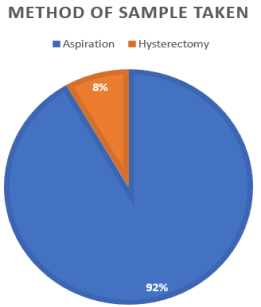
Majority of the samples 187(92%) were taken by manual vacuum Aspiration and 17(8%) were hysterectomy specimens.
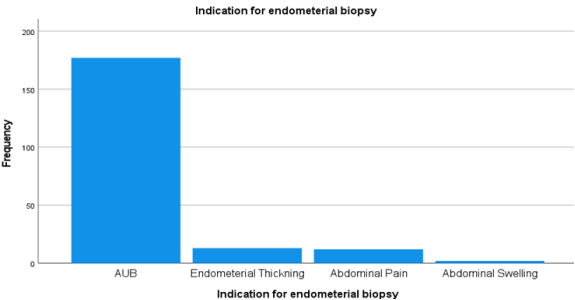
The commonest indication for endometrial biopsy was AUB in 177(86.8%) cases, followed by thickened endometrium in 13(6.4%), lower Abdominal pain in 12 (5.9%) and abdominal swelling in 2(1%) of the cases.
3.3. Histopathologic Patterns and Associated Factors
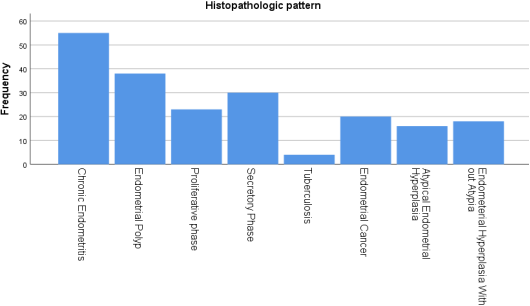
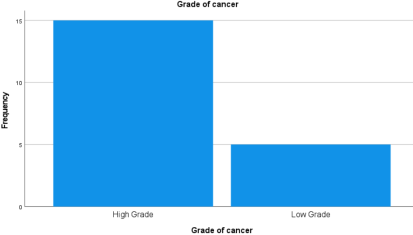
Out of total 204 cases of endometrial biopsy samples, the commonest histopathologic finding was chronic endometritis in 55 (27%) of cases followed by endometrial poly 38(18.6%), secretory endometrium 30(14.7%) and proliferative endometrium 23(11.3%). Atypical Endometrial hyperplasia, endometrial Hyperplasia withoutatypia and endometrial malignancy were reported in 16(7.8%), 18(8.8%) and 20(9.8%) of cases respectively. Tuberculous (TB) endometritis was reported in 4(2%) of cases only. From the endometrial cancer, the commonest is endometroid endometrial carcinoma 8(9.8%), followed by serous endometrial carcinoma 4(2%), MMMT 3(1.5%), endometrial stromal sarcoma 3(1.5%) and clear cell endometrial carcinoma 2(1%).15(7.4%) of endometrial cancer cases were high grade and 5(2.5%) were low grade. The majority of endometrialcancer cases were stage three (pT3).
Figure 3. Frequency of histopathologic patterns of patients for whom endometrial biopsy sample was taken at HUCSH from September 2019 to September 2024, Hawassa, Ethiopia.
Figure 4. Frequency of histologic grade of patients diagnosed with endometrial cancer at HUCSH from September 2019 to September 2024, Hawassa, Ethiopia.
3.3.1. Association of Histopathologic Patterns with Age and Parity
A Pearson chi square test was conducted to explore the association of histopathologic pattern with age and parity, both show significant association with X2 (N = 204), p<0.01) and X2 (N=204), p=0.036) respectively.
Results from this study show that the age group were 40-49 years had various different patterns followed by those aged ≥ 50 Years. This is consistent with the findings of an Indian study which found that the most affected age group was perimenopausal women between 41-50 years. Results from this study showed that atypical endometrial hyperplasias presenting a were common among those aged 40-49 years in our study the most common endometrial pattern among multiparous women chronic endometritis followed by endometrial polyp. (5).
Table 2.
Cross tabulation between Age category and histopathologic pattern of endometrial biopsy at HUCSH from September 2019 to September 2024, Hawassa, Ethiopia. Variable | Histopathologic pattern n (%) |
Age category n (%) | Chronic endometriosis | Endometrial polyp | Proliferative phase | Secretary phase | Endometrial cancer | *Others |
20-29 years | 5(26.3) | 6(31.6) | 4(21.1) | 1(5.3) | 0(0) | 3(15.8) |
30-39 years | 14(33.3) | 9(21.4) | 7(16.7) | 6(14.3) | 0(0) | 6(14.3) |
40-49 years | 27(30.7) | 13(14.8) | 9(10.2) | 19(21.6) | 5(5.7) | 15(17.1) |
≥50 years | 9(16.4) | 10(18.2) | 3(5.5) | 4(7.3) | 15(27.3) | 14(25.5) |
Table 3.
Cross tabulation between Parity and histopathologic pattern of endometrial biopsy at HUCSH from September 2019 to September 2024, Hawassa, Ethiopia. Variable | Histopathologic pattern n (%) |
Parity n (%) | Chronic endometriosis | Endometrial polyp | Proliferative phase | Secretary phase | Endometrial cancer | *Others |
Nulliparous | 9(33.3) | 9(33.3) | 4(14.8) | 1(3.7) | 0(0) | 4(14.8) |
Multiparous | 23(24.7) | 15(16.1) | 11(11.8) | 19(20.4) | 8(8.6) | 17(18.1) |
Grandmultiparious | 23(27.4) | 14(16.7) | 8(9.5) | 10(11.9) | 12(14.3) | 17(20.2) |
3.3.2. Association of Endometrial Cancer with Age and Parity
A Pearson chi square test was conducted to explore the association of endometrial cancer with age and parity. Endometrial carcinoma is most frequently seen in woman aged ≥ 50 years of age. These studies clearly indicate that endometrial carcinomas are associated with advancement of age, with being older than 50 years increasing the risks, suggesting a relationship between age group and the occurrence of endometrial disorders p= (<0.01).
Table 4.
Cross tabulation between Age and endometrial cancer at HUSCH from September 2019 to September 2024, Hawassa, Ethiopia. Variables | Endometrial cancer n (%) | P-value |
Age category n (%) | Yes | No | <0.01 |
20-29 years | 0(0) | 19(100) |
30-39 years | 1(2.4) | 41(97.6) |
40-49 years | 5(5.7) | 83(94.3) |
≥50 years | 14(25.5) | 41(74.5) |
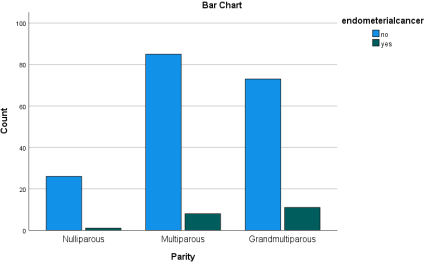
However, the association between endometrial cancer and parity was not significant in our study with X2 (DF=2, N = 20), p=0.314.
4. Discussion
The purpose of this study was to assess the histopathological patterns of endometrial biopsies diagnosed at Hawassa University Comprehensive Specialized Hospital. In the current study, the mean age of the study patients was 44.1 years with a minimum value of 20 and a maximum of 79 years and the majority of woman are in age group of 40-49 years 88(43.1%) which is comparable to the study done in saint Paul, Addis Ababa Ethiopia which showed the majority of age group between 40-49 89(32.1%) with the mean age of 41.89, minimum 20 and maximum 85 years and also comparable to study done in India at in the Department of Pathology at Apollo Institute of Medical Sciences and Research, Chittoor, Andhra Pradesh which also showed majority of age group between 40-49 90(41.8%) with mean age of 43.2 years.
| [6] | TY - JOUR - Brahmaiah, Jyoti- Kuppareddy, Lalitha - Papireddygari, Vijay - Begum, CR -2022/10/01 - Histomorphological Spectrum of Endometrial Tissue in Abnormal Uterine Bleeding. https://dx.doi.org/10.7860/NJLM/2022/57254.2674 |
| [9] | Abubakar M, Kabir B, Liman AA, Shehu SM, Kankia BL, Yahya A, et al. Histopathologic analysis of endometrial biopsies in a Northern Nigerian Teaching Hospital. Ann Trop Pathol 2020;
https://www.ajol.info/index.php/atp/article/view/274024 |
| [10] | Review of histopathologic findings of endometrial biopsy done at a tertiary referral hospital in urban Ethiopia Lemi B Tolu, Solomon Kabtamu, MustefaAbedella, GarummaToluFeyissa, Elias SenbetobioRxiv 2020.04.16.044610;
https://doi.org/10.1101/2020.04.16.044610 |
[6, 9, 10]
.
In our study, the commonest indication for endometrial biopsy was AUB in 177(86.8%) cases followed by thickened endometrium, 20(7.22%) which is comparable to most of the studies including study done in saint Paul hospital, Ethiopia which showed AUB 239(86.28%) as commonest indication for endometrial biopsy. Additionally study done in Kenya MOI referral and teaching hospital showed AUB in (88.3%) of the cases as commonest indication for endometrial biopsies.
| [9] | Abubakar M, Kabir B, Liman AA, Shehu SM, Kankia BL, Yahya A, et al. Histopathologic analysis of endometrial biopsies in a Northern Nigerian Teaching Hospital. Ann Trop Pathol 2020;
https://www.ajol.info/index.php/atp/article/view/274024 |
| [11] | Endometrial biopsies patterns among women attending Moi Teaching and Referral Hospital, Kenya, Andeso Grace PARIPEX Indian Journal of Research Volume 10, Issue 8, august 2021. https://doi.org/10.36106/paripex/4612441 |
[9, 11]
.
Chronic endometritis was the commonest histologic finding in our study accounting for 55 (27%) of cases followed by endometrial poly 38(18.6%) of cases, this finding differ from study in saint Paul hospital in which the majority of cases were endometrial polyp 66(23.83%) and study done in MOI referral and teaching hospital and in the University Emergency Hospital in Bucharest, Romania showed endometrial hyperplasia as commonest histopathologic pattern accounting for 61(50.4%) and 454(54.9%) of the cases respectively. proliferative phase seen in 67 cases (32.90%) is the commonest pattern in the study done at MM Medical College and Hospital, Solan, Himachal Pradesh, India. This variation can be justified by studies showed the increased in the incidence of sexually transmitted infection in Hawassa city, sidama, Ethiopia, since sexually transmitted infection is the one of the main risk factor for chronic endometritis.
| [2] | Singh, G., Cue, L., & Puckett, Y. (2024). Endometrial hyperplasia. In StatPearls [Internet]. Treasure Island (FL): StatPearls Publishing. Updated April 30, 2024. Retrieved from https://www.ncbi.nlm.nih.gov/books/NBK560693/ |
| [9] | Abubakar M, Kabir B, Liman AA, Shehu SM, Kankia BL, Yahya A, et al. Histopathologic analysis of endometrial biopsies in a Northern Nigerian Teaching Hospital. Ann Trop Pathol 2020;
https://www.ajol.info/index.php/atp/article/view/274024 |
| [12] | Birmeka, M., & Bekele, D. (2024). Distribution of the pattern, incidence, and determinants of sexually transmitted infections among patients attending Adari Hospital, Hawassa City, Sidama Region, Ethiopia. Healthcare in Low-resource Settings, 12(4). https://doi.org/10.4081/hls.2024.12806 |
[2, 9, 12]
.
Most of the endometrial cancer cases where seen in the age group ≥ 50 years of age, the commonest type being endometroid endometrial carcinoma which is comparable to the study done in Research done in the University Emergency Hospital in Bucharest, Romania, in which the majority cases from endometrial cancer were endometriod type. A Study done in in the Department of Pathology, Aminu Kano Teaching Hospital, Kano, north western Nigeria also showed Type I endometrial carcinoma, specifically endometrioid adenocarcinoma accounted for 80% of cases.
| [13] | Forae, G., & Aligbe, J. (2015). Histopathological Patterns of Endometrial Lesions in Patients with Abnormal Uterine Bleeding in a Cosmopolitan Population. Journal of Basic and Clinical Reproductive Sciences, 2(2), 101–104.
https://www.ajol.info/index.php/jbcrs/article/view/115412 |
| [9] | Abubakar M, Kabir B, Liman AA, Shehu SM, Kankia BL, Yahya A, et al. Histopathologic analysis of endometrial biopsies in a Northern Nigerian Teaching Hospital. Ann Trop Pathol 2020;
https://www.ajol.info/index.php/atp/article/view/274024 |
| [14] | Alshdaifat, E. H., AlHorani, S. S., Al-Sous, M. M., Al-Horani, A. S., Sahawneh, F. E., & Sindiani, A. M. (2022). Histopathological pattern of endometrial biopsies in patients with abnormal uterine bleeding in a tertiary referral hospital in Jordan. Annals of Saudi Medicine, 42(3), 204–213.
https://doi.org/10.5144/0256-4947.2022.204 |
[13, 9, 14]
.
In the current study TB endometritis was detected in 4(2%) which was comparable to cases seen in saint Paul hospital 3(1.08%) and India 3(2.5%) of the cases, but differed from studies done Romania, Nigeria and Turkey which showed no cases of Tuberculous endometritis.
| [15] | Bohîlțea RE, Sajin M, Furtunescu F, Bohîlțea LC, Mihart A, Baros A, Anca AF. Clinical and pathological correlations in endometrial pathology. J Med Life. 2015 Oct-Dec; 8(4): 552-62. https://pubmed.ncbi.nlm.nih.gov/26664489 |
| [9] | Abubakar M, Kabir B, Liman AA, Shehu SM, Kankia BL, Yahya A, et al. Histopathologic analysis of endometrial biopsies in a Northern Nigerian Teaching Hospital. Ann Trop Pathol 2020;
https://www.ajol.info/index.php/atp/article/view/274024 |
| [13] | Forae, G., & Aligbe, J. (2015). Histopathological Patterns of Endometrial Lesions in Patients with Abnormal Uterine Bleeding in a Cosmopolitan Population. Journal of Basic and Clinical Reproductive Sciences, 2(2), 101–104.
https://www.ajol.info/index.php/jbcrs/article/view/115412 |
| [10] | Review of histopathologic findings of endometrial biopsy done at a tertiary referral hospital in urban Ethiopia Lemi B Tolu, Solomon Kabtamu, MustefaAbedella, GarummaToluFeyissa, Elias SenbetobioRxiv 2020.04.16.044610;
https://doi.org/10.1101/2020.04.16.044610 |
[15, 9, 13, 10]
. The difference might be due to differences in setting, since tuberculosis is more common in developing countries like ours.
Endometrial carcinoma was most frequently seen in woman-aged≥ 50 years of age. These studies clearly indicate that endometrial carcinomas are associated with advancement of age, with being older than 50 years increasing the risks, suggesting a relationship between age group and the occurrence of endometrial disorders. This is comparable to study done in Kenya found a significant (p<0.001) number of endometrial cancer cases occurring in women aged 50 years and above. Additionally it is also comparable to studies done in India, Jordan and SPHMMC in our country
| [14] | Alshdaifat, E. H., AlHorani, S. S., Al-Sous, M. M., Al-Horani, A. S., Sahawneh, F. E., & Sindiani, A. M. (2022). Histopathological pattern of endometrial biopsies in patients with abnormal uterine bleeding in a tertiary referral hospital in Jordan. Annals of Saudi Medicine, 42(3), 204–213.
https://doi.org/10.5144/0256-4947.2022.204 |
| [11] | Endometrial biopsies patterns among women attending Moi Teaching and Referral Hospital, Kenya, Andeso Grace PARIPEX Indian Journal of Research Volume 10, Issue 8, august 2021. https://doi.org/10.36106/paripex/4612441 |
[14, 11]
.
5. Limitation of the Study
The current study has limitation as its retrospective document review and difficult to get some clinical history to determine factors associated with histopathologic findings.
We used nonrandomized convenience sampling method and being single center study which may limit the ability of this research to make generalizations to the population of interest in the locality.
6. Conclusion and Recommendation
Chronic endometritis was the commonest histopathologic pattern and AUB was the commonest indication for endometrial biopsy. Most cases of endometrial cancer cases presented at an advanced stage and in those older than 50 years of age.
Endometrial sampling should be done for women who are 40 years and above presenting with abnormal uterine bleeding. We also recommended that measures should be taken in order to decreased the incidence of Sexually transmitted infection so that the incidence of chronic endometritis will also decrease finally further prospective study should be conducted to generate more strong evidence that guides patient management.
Abbreviations
AUB | Abnormal Uterine Bleeding |
D&C | Dilation and Curettage |
FIGO | International Federation of Gynaecology and Obstetrics |
GLOBOCAN | Global Cancer Observatory |
HUCSH | Hawassa University Comprehensive Specialized Hospital |
MMMT | Malignant Mixed MullerianTumor |
MVA | Manual Vacuum Aspiration |
PCOS | polycystic Ovarian Syndrome |
SPHMMC | St. Paul’s Hospital Millennium Medical College |
TNM | Tumor-Node-Metastasis |
Author Contributions
Mishame Damtew Alembo: Conceptualization, Validation, Writing – original draft, Writing – review & editing.
Ghion Getnet Engida: Conceptualization, Investigation, Methodology, Supervision, Validation, Writing – review & editing.
Bamlak Markos Mante: Conceptualization, Investigation, Writing – review & editing.
Eyosafet Abera Asefa: Conceptualization, Investigation, Writing – review & editing.
Funding
The author(s) received no financial support for the research, authorship, and/or publication of this article.
Data Availability Statement
The raw data used in the present study are available from the corresponding author on reasonable request.
Conflicts of Interest
Authors declare no conflicts of interest.
References
| [1] |
JohnR, Goldblum, LauraW. Lamps, JesseK. Mckenney JM. Rosai and Ackerman’s Surgical Pathology 11th ed. Elsevier, 2017; 2018.
|
| [2] |
Singh, G., Cue, L., & Puckett, Y. (2024). Endometrial hyperplasia. In StatPearls [Internet]. Treasure Island (FL): StatPearls Publishing. Updated April 30, 2024. Retrieved from
https://www.ncbi.nlm.nih.gov/books/NBK560693/
|
| [3] |
Mahdy H, Vadakekut ES, Crotzer D. Endometrial Cancer. 2024 Apr 20. In: StatPearls. Treasure Island (FL): StatPearls Publishing; 2025 Jan–.
https://pubmed.ncbi.nlm.nih.gov/30252237
|
| [4] |
Sung H, Ferlay J, Siegel RL, Laversanne M, Soerjomataram I, Jemal A, Bray F. Global Cancer Statistics 2020: GLOBOCAN Estimates of Incidence and Mortality Worldwide for 36 Cancers in 185 Countries. CA Cancer J Clin. 2021 May; 71(3): 209-249.
https://doi.org/10.3322/caac.21660
|
| [5] |
Kumar V, Abbas AK, Aster JC. Robbins & Cotran Pathologic Basis of Disease Ninth Edition 2021. 1408 p.
|
| [6] |
TY - JOUR - Brahmaiah, Jyoti- Kuppareddy, Lalitha - Papireddygari, Vijay - Begum, CR -2022/10/01 - Histomorphological Spectrum of Endometrial Tissue in Abnormal Uterine Bleeding.
https://dx.doi.org/10.7860/NJLM/2022/57254.2674
|
| [7] |
S., A., G., P., & D., S. (2021). Study of histopathological patterns of endometrium in abnormal uterine bleeding. International Journal of Reproduction, Contraception, Obstetrics and Gynecology, 10(4), 1401–1405.
https://doi.org/10.18203/2320-1770.ijrcog20211110
|
| [8] |
Vijayaraghavan, A., Jadhav, C., Pradeep, B., Bindu, H., & Kumaran, S. (2022). A histopathological study of endometrial biopsy samples in abnormal uterine bleeding. Cureus.
https://doi.org/10.7759/cureus.31264
|
| [9] |
Abubakar M, Kabir B, Liman AA, Shehu SM, Kankia BL, Yahya A, et al. Histopathologic analysis of endometrial biopsies in a Northern Nigerian Teaching Hospital. Ann Trop Pathol 2020;
https://www.ajol.info/index.php/atp/article/view/274024
|
| [10] |
Review of histopathologic findings of endometrial biopsy done at a tertiary referral hospital in urban Ethiopia Lemi B Tolu, Solomon Kabtamu, MustefaAbedella, GarummaToluFeyissa, Elias SenbetobioRxiv 2020.04.16.044610;
https://doi.org/10.1101/2020.04.16.044610
|
| [11] |
Endometrial biopsies patterns among women attending Moi Teaching and Referral Hospital, Kenya, Andeso Grace PARIPEX Indian Journal of Research Volume 10, Issue 8, august 2021.
https://doi.org/10.36106/paripex/4612441
|
| [12] |
Birmeka, M., & Bekele, D. (2024). Distribution of the pattern, incidence, and determinants of sexually transmitted infections among patients attending Adari Hospital, Hawassa City, Sidama Region, Ethiopia. Healthcare in Low-resource Settings, 12(4).
https://doi.org/10.4081/hls.2024.12806
|
| [13] |
Forae, G., & Aligbe, J. (2015). Histopathological Patterns of Endometrial Lesions in Patients with Abnormal Uterine Bleeding in a Cosmopolitan Population. Journal of Basic and Clinical Reproductive Sciences, 2(2), 101–104.
https://www.ajol.info/index.php/jbcrs/article/view/115412
|
| [14] |
Alshdaifat, E. H., AlHorani, S. S., Al-Sous, M. M., Al-Horani, A. S., Sahawneh, F. E., & Sindiani, A. M. (2022). Histopathological pattern of endometrial biopsies in patients with abnormal uterine bleeding in a tertiary referral hospital in Jordan. Annals of Saudi Medicine, 42(3), 204–213.
https://doi.org/10.5144/0256-4947.2022.204
|
| [15] |
Bohîlțea RE, Sajin M, Furtunescu F, Bohîlțea LC, Mihart A, Baros A, Anca AF. Clinical and pathological correlations in endometrial pathology. J Med Life. 2015 Oct-Dec; 8(4): 552-62.
https://pubmed.ncbi.nlm.nih.gov/26664489
|
Cite This Article
-
APA Style
Alembo, M. D., Engida, G. G., Mante, B. M., Asefa, E. A. (2026). Histopathologic Patterns of Endometrial Biopsies and Associated Factors in Hawassa University Comprehensive Specialized Hospital, Sidama Region, Ethiopia. Medicine and Health Sciences, 2(1), 40-48. https://doi.org/10.11648/j.mhs.20260201.15
 Copy
|
Copy
|
 Download
ACS Style
Alembo, M. D.; Engida, G. G.; Mante, B. M.; Asefa, E. A. Histopathologic Patterns of Endometrial Biopsies and Associated Factors in Hawassa University Comprehensive Specialized Hospital, Sidama Region, Ethiopia. Med. Health Sci. 2026, 2(1), 40-48. doi: 10.11648/j.mhs.20260201.15
Copy
|
Download
AMA Style
Alembo MD, Engida GG, Mante BM, Asefa EA. Histopathologic Patterns of Endometrial Biopsies and Associated Factors in Hawassa University Comprehensive Specialized Hospital, Sidama Region, Ethiopia. Med Health Sci. 2026;2(1):40-48. doi: 10.11648/j.mhs.20260201.15
Copy
|
Download
-
@article{10.11648/j.mhs.20260201.15,
  author = {Mishame Damtew Alembo and Ghion Getnet Engida and Bamlak Markos Mante and Eyosafet Abera Asefa},
  title = {Histopathologic Patterns of Endometrial Biopsies and Associated Factors in Hawassa University Comprehensive Specialized Hospital, Sidama Region, Ethiopia},
  journal = {Medicine and Health Sciences},
  volume = {2},
  number = {1},
  pages = {40-48},
  doi = {10.11648/j.mhs.20260201.15},
  url = {https://doi.org/10.11648/j.mhs.20260201.15},
  eprint = {https://article.sciencepublishinggroup.com/pdf/10.11648.j.mhs.20260201.15},
  abstract = {Background: The endometrium is a dynamic, hormonally sensitive and responsive tissue. The endometrium is a site of a broad array of pathological alterations. Both benign and malignant lesions and hormonal cyclic changes can occur in the endometrium. These lesions have a significant impact in the life of woman. Objective: The aim of current study was to determine histopathologic patterns of Endometrial Biopsies and the associatied factors in Hawassa University Comprehensive Specialized Hospital. Method: A five years retrospective cross-sectional study was conducted from reports of endometrial biopsies which were submitted to the pathology department of HUCSH from September 2019 G.C to August 2024 G.C. Result: A total of 204 endometrial biopsies were analysed in this study that fulfil the inclusion criteria. The youngest age was 20 years and oldest was 79 years with mean age of 44.1 years and standard deviation of 11.939. 187 (91.7%) samples was Manual vacuum aspirations and 17 (8.3%) was hysterectomy specimens. The commonest histopathologic finding was chronic endometritis 55 (27%), followed by endometrial polyp 38 (18.6%), secretory endometrium 30 (14.7%) and proliferative endometrium 23 (11.3%). The other important patterns include endometrial hyperplasia without atypia 18 (8.8%), Atypical endometrial hyperplasia 16 (7.8%), endometrial cancer 20 (9.8%) and Tuberculosis 4 (2%). From the endometrial cancer cases, the commonest is endometroid endometrial carcinoma 8 (9.8%), followed by serous endometrial carcinoma 4 (2%), MMMT 3 (1.5%), endometrial stromal sarcoma 3 (1.5%) and clear cell endometrial carcinoma 2 (1%). The histopathologic patterns was significantly associated with age groups (p=0.01) and parity (p=0.036). Conclusion: Chronic endometritis is the commonest histopathologic finding.},
 year = {2026}
}
Copy
|
Download
-
TY  - JOUR
T1  - Histopathologic Patterns of Endometrial Biopsies and Associated Factors in Hawassa University Comprehensive Specialized Hospital, Sidama Region, Ethiopia
AU  - Mishame Damtew Alembo
AU  - Ghion Getnet Engida
AU  - Bamlak Markos Mante
AU  - Eyosafet Abera Asefa
Y1  - 2026/01/16
PY  - 2026
N1  - https://doi.org/10.11648/j.mhs.20260201.15
DO  - 10.11648/j.mhs.20260201.15
T2  - Medicine and Health Sciences
JF  - Medicine and Health Sciences
JO  - Medicine and Health Sciences
SP  - 40
EP  - 48
PB  - Science Publishing Group
UR  - https://doi.org/10.11648/j.mhs.20260201.15
AB  - Background: The endometrium is a dynamic, hormonally sensitive and responsive tissue. The endometrium is a site of a broad array of pathological alterations. Both benign and malignant lesions and hormonal cyclic changes can occur in the endometrium. These lesions have a significant impact in the life of woman. Objective: The aim of current study was to determine histopathologic patterns of Endometrial Biopsies and the associatied factors in Hawassa University Comprehensive Specialized Hospital. Method: A five years retrospective cross-sectional study was conducted from reports of endometrial biopsies which were submitted to the pathology department of HUCSH from September 2019 G.C to August 2024 G.C. Result: A total of 204 endometrial biopsies were analysed in this study that fulfil the inclusion criteria. The youngest age was 20 years and oldest was 79 years with mean age of 44.1 years and standard deviation of 11.939. 187 (91.7%) samples was Manual vacuum aspirations and 17 (8.3%) was hysterectomy specimens. The commonest histopathologic finding was chronic endometritis 55 (27%), followed by endometrial polyp 38 (18.6%), secretory endometrium 30 (14.7%) and proliferative endometrium 23 (11.3%). The other important patterns include endometrial hyperplasia without atypia 18 (8.8%), Atypical endometrial hyperplasia 16 (7.8%), endometrial cancer 20 (9.8%) and Tuberculosis 4 (2%). From the endometrial cancer cases, the commonest is endometroid endometrial carcinoma 8 (9.8%), followed by serous endometrial carcinoma 4 (2%), MMMT 3 (1.5%), endometrial stromal sarcoma 3 (1.5%) and clear cell endometrial carcinoma 2 (1%). The histopathologic patterns was significantly associated with age groups (p=0.01) and parity (p=0.036). Conclusion: Chronic endometritis is the commonest histopathologic finding.
VL  - 2
IS  - 1
ER  -
Copy
|
Download




 Share This Article
 Twitter
 Linked In
 Facebook